The “Great Bird Depression of 2025-26” in the White Mountains.
By Dan Groebner
Most of the discussion in the White Mountains lately has centered on the lack of any significant snowstorms this winter. Since more than half of our precipitation and recharge moisture comes in the form of snowpack, we probably should talk about it. An honest discussion of why we continue to get drier and drier might not hurt either.
Some people have astutely noted a lack of many of their familiar feathered friends both at their feeders and on the area lakes. The Christmas Bird Count, conducted by the National Audubon Society and many dedicated volunteers, may have noted at least a small decrease in bird numbers locally. Duck hunters have only had a couple of storms during the season and haven’t seen the numbers of ducks like in previous years. And most people feeding birds have not been refilling the feeders like in years past.
These are not very scientific assessments of the local bird populations, but enough observations by locals can be very convincing, even without any kind of strategic sampling strategy or complex statistical voodoo formulas.
Some reasons for these perceived drops in bird numbers could be obvious, while others are more subtle and nearly invisible. Much of the western US has had a relatively mild winter, like we are experiencing in Arizona. Since migration is very energy intensive and exposes travelling birds to unfamiliar risks and higher mortality, most birds will only migrate as far as they need to, if they even need to!
Northern states have long been trying to keep waterfowl in their states as long as possible through food plantings and raising water levels in marshes temporarily, but harsh winter storms have been very effective in convincing the birds to fly south to a more favorable latitude. This year’s weather, along with the accommodations already prepared for wintering birds, have probably been enough to convince even the most traditionalist bird migrator to stick around areas like Great Salt Lake or other northerly lakes and reservoirs.
Without snow covering the ground, many seed-eating birds are enjoying the all-you-can-eat wild smorgasbord by dining solitarily, instead of at the hyper-social backyard bird feeders. Feeding alone in areas with lots of shrub cover discourages hawks and falcons from preying on the smaller birds, so many of the smaller birds will spend much more time in these wild areas instead of at a feeder in a nicely manicured lawn or backyard. During most winters, this food source is buried under a couple feet of snow for at least a month or two, and many birds find it easier to forage at feeders.
We might also see a delayed response from the ongoing drought conditions in the area through a depressed overall reproductive rate and year-round survival of new bird recruits. Many young chicks rely on high-protein and energy-rich insects as some of their first foods. Insects require relatively high humidity for their various life stages to mature, which rarely happens in drought-stricken habitats. The smaller number of insects might only have a subtle effect on a local batch of bird chicks, but if there was a lack of these food sources over a wider range, it could be a reason for some of the bird population declines we are perceiving.
Drought conditions during the summer obviously affect the growth and maturation of grasses and their nutritious seed heads. If birds that feed primarily on seeds cannot find enough, they will have to move on to other areas, giving us the impression that their population is declining.
Even though avian bird flu is certainly present in Arizona, there have been no reports of large-scale die-offs of any type of bird species, so this disease probably isn’t the reason for seeing fewer birds this year. And you might see more YouTube videos these days of hawks taking advantage of backyard bird feeders for an easy meal with the proliferation of motion-detecting Ring cameras, but predation by itself can not explain why we are seeing fewer birds this winter.
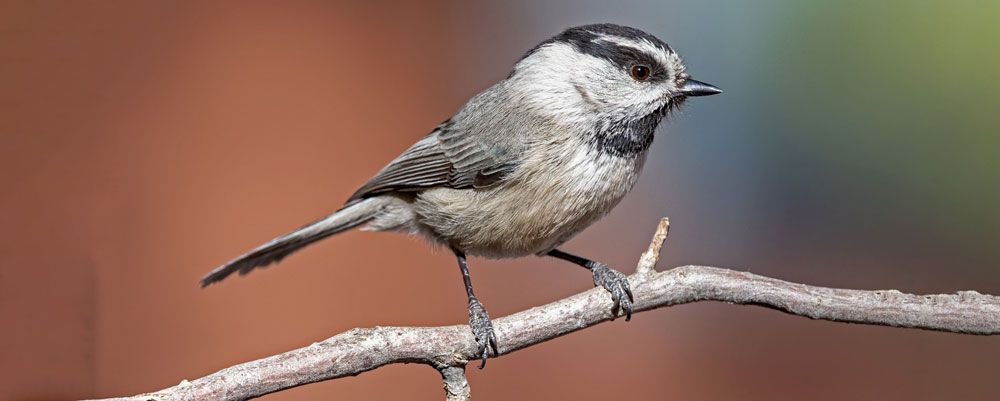
Undoubtedly, some of you may fill your feeders just as much, or maybe even more, than you have been in previous years. Lucky birder!! You may have started feeding before any of your neighbors, or you may have caught a noisy flock of juncos that attracted a few loudmouth black-capped chickadees who then did the bulk of the advertising for your feeder. Or do you offer water as well? This is probably more effective in attracting birds, considering our current conditions.
Even if your feeder is not bringing in any birds now, it might be a good idea to maintain it until the spring green-up. A sudden snowstorm will blanket the ground and bury the seeds that birds have had no trouble finding until now. You might also provide a nutritious meal for migrating birds, who can use any easy to get calories they can find.
Whatever the cause, or causes, for our collective observations of fewer birds in the area this winter, it could just be a one-winter phenomenon, with numbers rebounding next year if we are fortunate with more precipitation. Recent studies in New Mexico by university researchers showed an immediate response by nesting birds to even small-scale increases in moisture.
Since there are so many variables that shape the size and breeding success of bird populations, we may never know what caused the “Great Bird Depression of 2025-26” in the White Mountains. But if you all would go out and do your best snow dance, we might eliminate one of the suspects!!!
Wondering how to learn more about birds in the White Mountains??
Interested in helping with some simple bird surveys? Want to get involved with possibly saving the life of a local eagle or osprey? Curious about the status of the eagle nests in the White Mountains? Wondering why some geese on the area lakes are wearing neck bands with numbers? How about conducting a bird survey from the comfort of your vehicle with guaranteed sightings of your target species?
You can learn more about these opportunities and many more by attending the Annual All Birds Conservation Initiative meeting at the Pinetop Game and Fish Headquarters during the week of March 23, with the exact date to be determined. To get more information, email dgroebner@azgfd.gov or call (928) 532-2308.
This meeting is open to anyone interested in local birds. Many citizen-scientist type projects will be introduced. In addition, federal and state wildlife agency biologists will provide reports on local bird populations and training opportunities.