Tonto Natural Bridge
By Annemarie Eveland
Photos by Annemarie
and Courtesy of Katie Jordan
of Tonto Natural Bridge Park
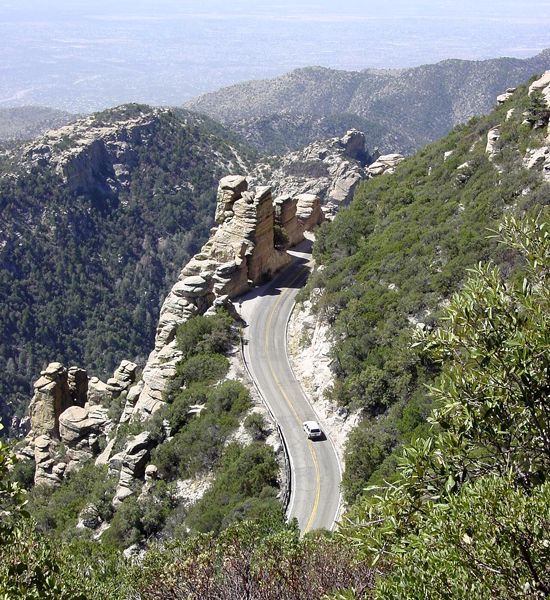
I arrived early at the famous travertine bridge, even though the twisting downhill two-lane road wound tightly around the mountainside. I knew that driving slowly downhill was prudent. It was mid-morning, and some of nature was showing off a few colorful blooms and lush greenery already at the beginning of March. I wandered into the visitor center, named Goodfellow Lodge. The Goodfellow Lodge pleasantly organizes exhibits that showcase the bridge’s history, natural items of interest, as well as books relevant to the area.
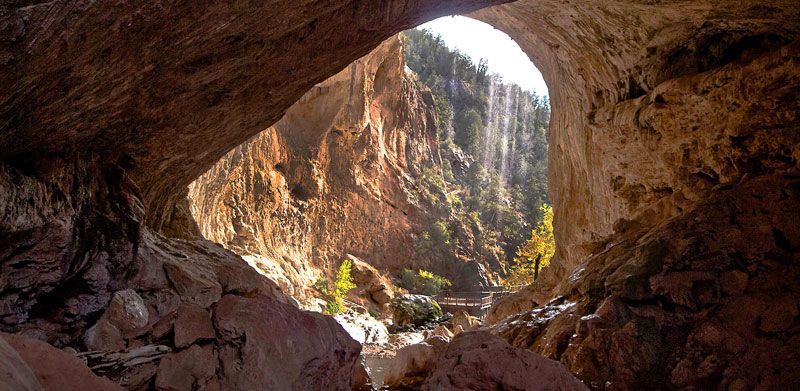
I was eager to see the world’s largest natural travertine bridge and explore its tunnels, caves, and gigantic formations that belie an understanding of how they created themselves. But how it was formed was intriguing to me. Almost hidden for eons in this narrow canyon, it stands 185 feet high over a tunnel which is 150 feet wide and over 185 feet high, and boasts of a 400-foot-long tunnel. The road to the bridge is located 10 miles north of Payson and five miles south of Pine on Highway 87/260.
I learned that this Tonto Natural Travertine Bridge has quite a history. Early on, indigenous peoples used this area for over 11,000 years. Archeologists have discovered many remains here from 1000 to 4000 CE; groups of Apache used the area in the early 1500s but more so in the 1650s. The original name for this bridge was in Athabaskan, meaning “hole there."
The Tonto Apache used the area between 1600 and 1866.
The first white men to come into the Natural Bridge area were US Army Company E volunteers from what is now known as Fort Verde on July 11, 1866. They fired upon the rancheria, scattering the Apache residents and driving the Apache from the area. Then, around 1878, three prospectors, Irving House, W. Snow, and William Nelson, stumbled across the bridge and filed a squatter’s claim in 1880. Gowan from Scotland, who arrived in 1874 and served with the British Navy, helped found the community of Gisela. W. Snow offered his claim on the bridge to him to homestead before the claim expired. Gowan has been credited with its discovery.
One story about Gowen was that he fled up Pine Creek to the bridge to hide in a cavern for three days to escape the Apaches. He planted groves of walnut, apricot, peach, cherry, and pear trees, and built a small home. He grew gardens, hunted game, and prospected.
By 1882, Gowan met other settlers, and his discovery spread throughout the Arizona Territory. In the early 1890s, an English journalist wrote about his visit in the newspaper, and David Gowan Goodfellow read it, wrote to him, and the letter incredibly reached Gowan, who wanted to resume his nomadic lifestyle. So Gowan wrote back, offering him the site if he’d bring his family and permanently settle on the land.
The Goodfellows created six guest cabins and built a 10-room lodge with running water for 36 people between 1901 and 1908, though they registered 60 guests. Then, in 1948, Glen Randall asked to buy Goodfellow’s property, and they sold it to him. Randalls made ongoing improvements on the land and lived there for 21 years.
Then a series of land transfers occurred: the Wolkswinkles acquired the land in 1958, and in 1986, Tonto Bridge’s nomination and acceptance on August 21 led to the property’s listing in the National Register of Historic Places. October 12, 1990, the park sold the property to the Park’s Board, becoming Arizona’s 26th State Park.
They have made many improvements over the past years. I visited this historic treasure many years ago, and now its improvements and amenities impress me.
The lodge was a focal point for weddings, dances, and social events in the 20s and 30s. Meals were served ranch-style, with the dining room easily holding 50 to 80 guests. The walls feature old photos, and the flooring is still the sturdy strip oak from 1926. Upstairs there are 10 guest bedrooms (accommodating 24 guests in shared rooms), enclosed sleeping porches, and shared bathrooms. They used construction and furniture from various decades of the 20th century, including original cast-iron sinks. The accommodations include a General Crook Suite, the Goodfellow Suite, and the Beryle Goodfellow Suite, notable for its spacious porch capable of sleeping six. The Observation Room — the lodge’s renovation in 1987 gave it its current appearance — was originally a sewing room for the Goodfellows. It served as a bar and poolroom in 1948.
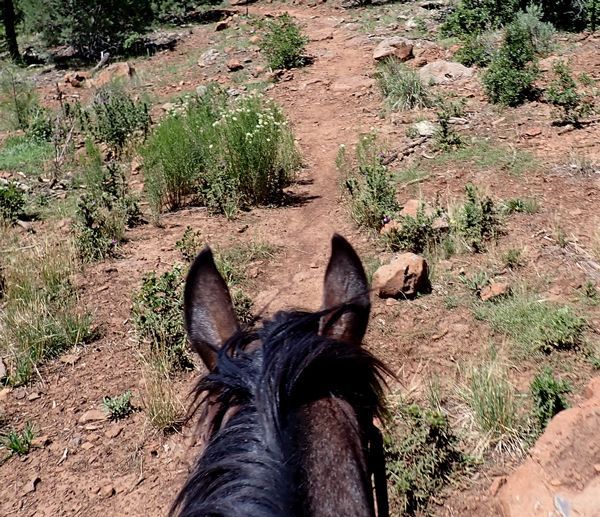
The park has four unique hiking trails: with viewpoints and scenic access trails. The Gowan Trail is steep, leads to an observation deck at the bottom of the creek, the Anna Mae Trail (500 feet) is steep and goes to the canyon bottom linking to the Pine Creek Trail; Pine Creek trail is about a half mile through the woods into a canyon and along a creek, and Waterfall Trail is 300 feet long down uneven stairs and undergrowth ending at waterfall cave. Hiking under the bridge is at least 10 degrees cooler. Starting in April this year, you can sign up for The Lodge Tour or Nature and Bird Walks. So, if you’d like to hike during the day and stay overnight at The Lodge, you can enjoy nice accommodations and friendly staff. For a couple, there is now a compliant ADA suite downstairs that rents for two people.
The Tonto Bridge facility has a functioning piano, and it is easy to imagine the rousing songs that qualified visitors can add to the volunteer piano playing. There is also an organ; David Gowan transported the organ and piano to their new home, pulling them up from the Pine Creek below via pulleys and hoisting, a daunting feat in itself. However, the organ is not playable; just a charming piece of their history.
The expansive dining room, with its lovely beams and windows that look out to natural surroundings, can accommodate about 80 guests for dinner. I was told they also provide wedding packages; the main kitchen contains all necessary cookware, and comfortable dressing rooms are available. There are two waterfalls from a spring source, offering an excellent source of water for drinking and cooking. The landscape is green even in the Arizona summer thanks to the underground water flow. However, visitors can enter the park only during its operating hours. Note: It’s best to contact the park for more information about weddings because of the limited spots available.
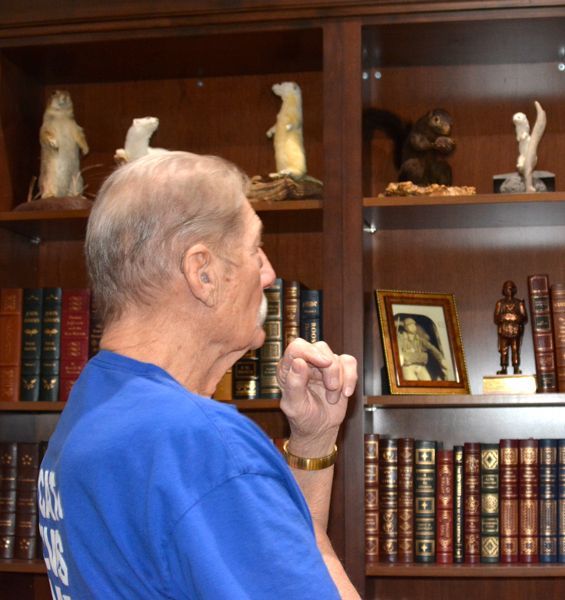
It was great to meet and talk with Park Manager Katie Jordan again, who has been with the park for eight years. Since I saw her in May 2018, she has a new husband and a daughter. Katie started in a seasonal position (March to November) and in November received her Ranger II status. Katie exudes a gentle charm and kindness while maintaining professionalism. I can see how she is a real asset to the worthwhile project of the still famous, forever Tonto Natural Bridge!
They estimate that this favorite Arizona State Park welcomed over 130,000 visitors in past years, which is not surprising. The property has picnic tables and ramadas, lots of easy parking spaces, and friendly, helpful staff to assist visitors. You can take a break from your cell phone except for taking photos, as there is no internet. The park entry fee is: $10/adults, $5/children ages 7 to13 and children ages up to 6 are free. Hours for the visitors’ center are 9:00 a.m. to 5:00 p.m., seven days a week, with last entry at 4:00 p.m. (hours are different during holidays). Trails close one hour before the park closes. The Tonto Bridge is located ten miles north of Payson on Highway 87.
Note: Dogs are not allowed on trails into the canyon.
It is always a good idea to check their website for any updates or reminders at azstateparks.com/tonto or call them at 928-476-4202.
A special event, “Taste at the Bridge,” happens Saturday, September 26th. For more information and tickets, visit tontonaturalbridge.org