Birding Opportunities in the White Mountains of Arizona
By Dan Groebner
Is our winterless spring actually here? We’re going to need some well-timed storms in the next few months to keep us out of scary fire conditions, since we are running so far behind right now. But that scenario has happened in the past, so let’s cross our fingers and be “fire-wise” starting now.
If you spend any time outside, you have probably also noticed that the days are getting longer as summer approaches. And they are getting longer faster than at any other time of the year, and it has nothing to do with daylight savings time. In fact, we gain over an hour in March in the White Mountains, where in the northern U.S., like in Ely, Minnesota, they gain almost two hours during March. It all has to do with the tilt of the Earth and the angle at which sunlight reaches us during different seasons, with northern latitudes experiencing more extreme differences in angles from summer to winter. On the spring or vernal equinox, March 20, the length of the day and night is essentially the same throughout the globe, gradually becoming longer for us until the summer solstice on June 20.
Most biologists point toward day length as a primary cue for birds to start migrating back north again in the spring. Chasing the longer day lengths pays off in more time for feeding and higher productivity in prey species and plant growth, even if you have to expend a lot of energy doing that. Fortunately for us, that means the birds are parading through the area right now in front of us literally saving us the hassle and expense of traveling to see them in their northerly summer or exotic winter habitats.
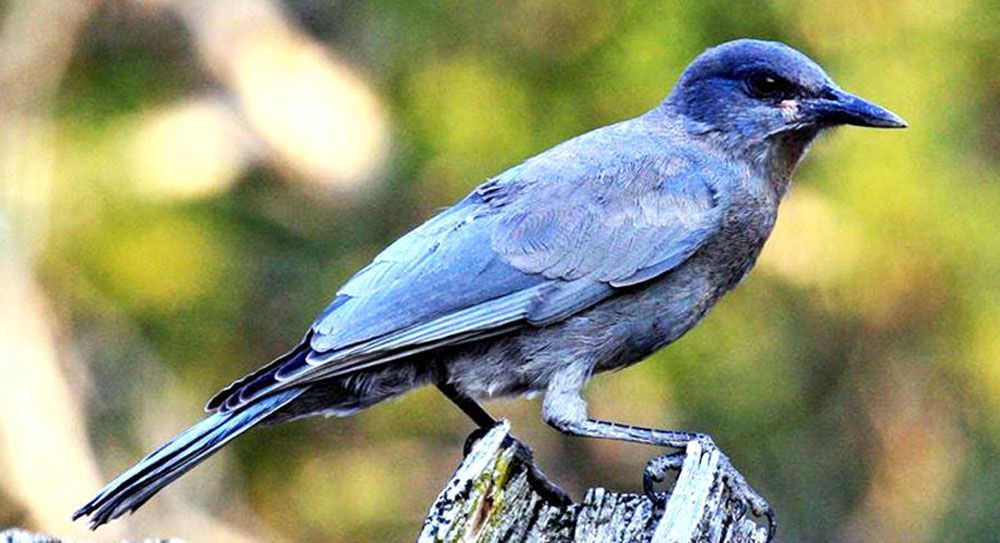
The White Mountains of eastern Arizona support many different types of layover habitats for migrating birds and those who decide to hang out and make it their breeding territories. Since our area provides so many acres of high-quality habitat, wildlife agencies monitor populations from year to year to measure any changes in numbers to assist in conducting management activities or recommending changes. Some species being monitored include bald eagles, peregrine falcons, osprey, marsh birds, herons and cormorants and other birds nesting in rookeries, grebes, pinyon jays, yellow-billed cuckoos, bluebirds, mountain plovers, kestrels, and willow flycatchers.
Even though most of these monitoring activities are conducted by the Arizona Game and Fish Department, Tribal Wildlife Agencies, the US Forest Service, or the US Fish and Wildlife Service, there are many opportunities for the general public to learn more about their results and possibly get involved with helping collect data for these surveys.
One of these opportunities is the upcoming Arizona Bird Conservation Initiative meeting in Pinetop on Thursday, March 26, at the Arizona Game and Fish Regional Headquarters conference room from 10:00 to about 2:00 pm. The office is located at 2878 East White Mountain Boulevard, on Highway 260 in Pinetop. The meeting is open to the public.
This annual Bird Conservation meeting is usually attended by interested members of the general public and biologists from various wildlife management agencies. Annual status reports will be provided on various species and habitat improvement projects and outreach efforts.
The Important Bird Area program will be discussed, and nearby areas with this designation will be identified, allowing interested birders to focus on spots with a rich diversity of birds or the high likelihood of seeing specific groups of birds. The two closest areas are the Upper Little Colorado River Watershed and the Blue River, are important bird areas.
Another project that will be discussed at the meeting is the relatively new method of monitoring the long-range movements of even some of the smallest birds, called the Motus telemetry system. The miniature tag placed on the bird can be solar-powered, uses very little power, and is detected by any of thousands of automated Motus receiving stations distributed throughout the world. These stations are usually directly connected to the internet, allowing almost real-time notices of detections to the scientists who placed the Motus tag on the bird in the first place.
Are you looking for ways to help a little when you have time? There will be plenty of opportunities announced at this meeting to get involved with bird conservation in the White Mountains. This could range from something as easy as reporting a number on the neck of a banded goose on Rainbow Lake to setting up your own bluebird trail of a few nest boxes.
One of the easiest and most effective ways to help the local eagle, osprey, and waterfowl population is to help with a lake cleanup project aimed at removing the monofilament fishing line that can entangle both adult and young raptors. The Rim Lakes cleanup project will be held on April 29, 2026, and co-sponsored by the Arizona Game and Fish Department and Arizona Public Service. Volunteers will be needed to walk the shores of Willow Springs along with Woods and Bear Canyon Lakes. Wildlife managers Abigail Coleman and John McMahan are organizing the event. More details and free registration can be found at (928) 367-4281.
If you have the activity pattern more similar to a bat or an owl, there are also bird surveys that need to be done at night. And they are not for owls! The nightjar family of birds actively feed after dusk and before dawn and includes the common nighthawk that can be seen hunting moths under the lights at the football field on Friday nights. Some estimates show a significant decline in these species of birds, possibly because of their high dependence on abundant and healthy insect populations, which have been hurting lately with our extended drought.
Activities and field trips of the Arizona Field Ornithologists organization will also be announced, including some mountain plover surveys in the White Mountain areas. One of the annual counts they help coordinate with the eBird birding app is the Global Big Day on May 9, 2026. On this one day each year, people count as many birds and species as they can on routes and areas organized by county and report them to the eBird app for all to see and enjoy.
Even though it is still months away, planning for the 2027 High Country Hummingbird Festival on July 25, 2026, at the Sipe White Mountain Wildlife Area has begun. This year’s festival will provide many tips on photographing hummingbirds, involve the public in an “AI” Hummingbird Count (Annual Instantaneous, that is), and display what is purported to be the world’s largest (and possibly only) self-cleaning hummingbird feeder! Don’t miss it! The festival also needs volunteers, so please call (928) 532-2308 to sign up to help.