Mount Lemon: A Gift and a Challenge
By Annemarie Eveland
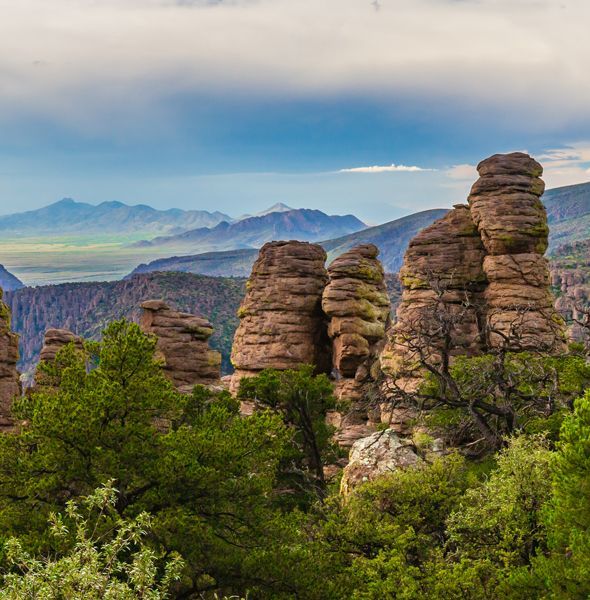
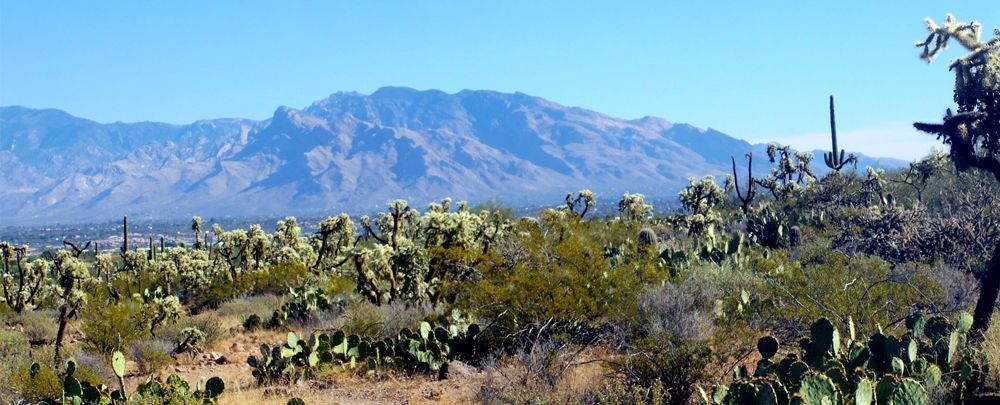
Mount Lemmon is in the Coronado National Forest, north of Tucson, Arizona. This scenic 27-mile long beautiful drive meanders up the mountain, providing breathtaking views of the passing scenery. To get to Mount Lemmon, drive on Catalina Highway (also called Mount Lemmon Scenic Byway) which takes you up over 6,000 feet above the desert floor below. The drive goes through diverse landscapes, from desert vistas to alpine forests. The changing picturesque landscape holds its own enchantment and changes with many turns of the road. Stopping at viewpoints along the way enables visitors to enjoy the breathtaking views of its mountains and valleys, and is a rewarding experience. However, some drivers are intimidated by the many hairpin turns on the road. Along the way, Windy Point Vista is a favorite stopping place. Located further up the drive, there is Mount Lemmon Ski Valley (a ski resort) offering skiing, snowboarding, mountain biking, and disc golf in winter. This area is known for natural beauty and outdoor recreation. It is also a haven for various animal habitats, such as mountain lions, black bears, a variety of bird species, Mexican spotted owls, and peregrine falcons.
Part of this mountain’s history includes prospectors who came seeking gold and silver discovered on Mount Lemmon; in 1881, botanist Sara Plummer Lemmon reached its peak, and it was named after her.
Mt. Lemmon has become a popular tourist attraction and destination for residents as well. It was also featured in several movies and TV programs.
I also learned that early in its history, there wasn’t a road on the front side of the mountain. People used to go to Oracle, stay overnight, and then ride donkeys or burros up to the Mount Lemmon peak. Later, the inmate prisoners built the road up the front side. They also built some barracks and stayed in them while working on the road. During World War II, the barracks were also used as a Japanese internment camp. After the internment camp was closed, the Boy Scouts used the buildings.
So, Mount Lemmon has survived several lifestyles.
Recently, when some of my family gathered in Tucson, we took that trip to Mount Lemmon again after so many years. And we recalled one trip to Mount Lemmon that was with Dad and us kids. That memory sticks out in all our minds because of what happened on that childhood adventure.
Dad had taken us all up to Mount Lemmon, about an hour’s drive from our home in Tucson. It was a steep drive and ended in lush, cool, green, tall pine trees. That trip Mom didn’t go. Just Dad and all of us kids. She packed a picnic lunch, and with strict orders for all of us to stay close to Dad and within earshot. This meant that he would blow the whistle every thirty minutes, and we should all come running and check in with him so he knew we were okay.
“Yes, yes.!” we all said, without thinking. Dad was already in his pickup truck. He had again unloaded all the many tools that filled the back of the truck while working in his garage. We helped with excited anticipation that this meant something wonderful was about to happen. But he didn’t tell us where we were going. It was a “surprise.” When he said, “Mt. Lemmon,” we raced into our rooms to grab our coats and shoes. And within a few minutes, we were rushing out to the pickup in the driveway. He was already inside “warming up the truck.” I think he didn’t want to be around where Mom was giving many protective instructions and warnings.
We all headed out of town for the bright green adventure. Some of us started singing, some saying, “Shh!... look here…oh, look at that…or did you see……” The conversation was staccato, the interruptive manner of excited kid talks only showed how fun it was to be going on another adventure.
When we got to the top of Mount Lemmon, we settled down. It was fresh and cool, and an adventure waiting to unfold. When Dad stopped the truck near a picnic table, we all tumbled out. It must have been a sight to see. I think there were seven of us by then, all from the back of the truck and hauling picnic stuff with us. The tablecloth was Mom’s idea, and Dad said, “We don’t need that stuff.” With that, he just opened the ice chest in his typical farm boy style, plunked the items on the wooden picnic table aside the fallen pinecones, pine needles and leftover papers from the picnic before.
Our picnic table now displayed delightful treats of mom made potato salad, sliced cucumber pickles, two large bags of Laura Scudder’s potato chips, wieners (to be cooked), Rainbow hot dog buns, catsup bottle filled to the brim, yellow mustard jar, and an unsealed jar of mayonnaise. The thin white paper plates stacked high and a roll of paper towels for napkins. For dessert, one of Mom’s — favorite of Dad’s — chocolate cakes in a long aluminum pan with foil on top. We could see the frosting sticking to the top of the foil, and I worried a little: “What if my piece of the cake didn’t have frosting because it stuck to the underside of the foil?”
Dad was already putting some pieces of twigs and newspaper into the metal firepit and called for us kids to collect firewood so that we could cook the wieners. It was a tradition that took pride and a bit of competition. Without saying it, each of us kids tried to outdo the others with the largest piece of firewood we could bring over. Dad was most likely amused, knowing the entire time that we only needed small amounts to cook wieners, yet he said nothing. In his typical way, quiet and unassuming, he knelt before the charcoaled pit and blew on the little embers still left. Suddenly the fire started up. Magic, I thought. How does he do that? It was years later I would have cause to tremble at the ease with which fires could start from leftover lazy campers leaving fires un-dowsed and unattended. Soon each of us had a twig which Dad had fashioned for our wieners.
Standing before the fire, smoke blowing in every direction, we breathed in the fire’s breath and giggled at our sizzling tubes of meat. My brother Tom was brave, pushing his stick into the flames, causing his wiener to burn black instantly. He moved it back to blow off the flames. Then we didn’t worry about embers flying high into the branches of dry pine trees overhead. We only thought about the tasty treats we were cooking.
Soon, all was quiet as we munched down the luncheon hurriedly so we could play. The rules were: “You can play, but stay in sight or earshot and come immediately when the whistle is blown.” Strict upbringing taught us to fully respect obedience. We finished eating. Dad differed from Mom. Mom was the neat nick. Mom considered Dad sloppy, though she never called him that; we could tell from the pile of his clothes, the way he left things and made messes in the house, that she didn’t approve of his style. It was different with his tools, though. He was a perfectionist about them, carefully putting them away, caring for them routinely, and becoming very upset if someone were to touch them without permission and respect.
He always told us, “You take care of your tools, your tools will take care of you.” I wondered how the tools would get food on the table or fix something, but never asked and figured Dad knew what he was talking about. Years later, I handled and cared for my household tools with the same genuine respect that he did, and I admonished others if they threw tools down or didn’t bother to put them away after they finished using them. I used my Dad’s saying as proof of the importance of the message.
When the food was put away, we kids ran in every direction, and Dad lay down on a blanket to rest with the whistle tied around his neck. We knew at least we had thirty minutes to play hide and seek. In our younger years, it was easy to run up and down the hillsides dotted with pine trees, hiding behind one then another from the person who was tagged as “IT.” When you saw someone and ran over and touched them, then it was their turn to be “IT”. We were evenly matched in speed and stealth. But we grew weary of the game after only twenty minutes. So, we split up, and several of us went downhill to explore, and my brothers Tom and Greg and sister Joan went uphill. We roamed the hillside, picking up little wooden treasures and anything of nature that caught our eye.
My sister Kathy and I went downhill. We were roommates at home; she was the neat-nick; I was the sloppy one. She could tell every little wrinkle in her bunk bed above me if I touched her mattress edge. Or if I were to touch her dresser top with the lace doilies. It was amazing and frustrating, too. I was nicknamed “Raggedy Ann”. I didn’t care much if I had a little tear in my clothes or a stain. Just tiny things, I thought. But Kathy, she would make sure that everything was in pristine condition. But on this hillside, there was nothing to fix, or a brushed spot on clothes went unnoticed or unattended.
She and I were having fun. Still no whistle. After a while, we got worried that we hadn’t heard the whistle and made our way back to camp.
There was Dad, snoring soundly on the blanket shaded by the majestic pine trees. We wanted to pull his pocket watch out of his pocket and see what time it was. It was growing very late now; the shadows stretched long through the trees. I shivered. I wondered how long it would be before dark.
I told my sister, “We had better wake him up, even though we’re told never to wake Dad when he is sleeping. He needed all the rest he could get.” Kathy shook his right arm. Snoring sounds increased. She looked at me. I called out, “Dad! Dad! Wake up! It is getting late.” His eyes blinked open and looked around. “Where are the other kids?” he asked.
“We don’t know,” we both chimed in. We didn’t dare ask him, “Why didn’t you blow the whistle?” He had fallen asleep immediately and never woke until now.
He was quickly on his feet, looking around. Blew the whistle several times. No response. He shouted. We joined in with our youthful voices. Still nothing. I could tell that Dad was becoming worried. “You stay here,” he told us. We stood frozen. Somehow it felt like something was very wrong. We had never been separated from our other siblings before, for an unknown reason. Dad climbed up the hillside fast. He was amazingly agile on his feet, I thought. He still wore his work boots, even when he wasn’t working. Chippewa Boots. (Mom finally found something that made his feet feel good, since he was on them all the time.) His feet made long, swift strides. He then disappeared along the ridge of the mountain, behind the many pine trees. I shivered again. Hurry back, Dad, I thought. Please hurry back.
He seemed to be gone forever, but then I saw him hurrying down the mountainside again. Without my brothers and sister. I was really worried now.
“Get in the truck,” he said firmly. We gathered the picnic things, but he said sternly, “Leave them there!” I felt the pit of my stomach turn cold. We rushed to get into the cab of his pickup. We sat still, but he started the truck up and began driving so fast that we thought we would hit something. The ride stopped at the ranger station. “Stay here,” Dad said, and went into the ranger station. Soon, two official-looking men came out and got into their truck, saying, “The sheriff should be here soon. Show us where they left…” and disappeared into their vehicle. Dad was already in the truck again, and we returned to our campsite. He took the rangers up the mountainside again, after they asked my sister and me when and where the other kids had left us.
I felt a sick pain inside. Was I responsible for this? Somehow? I heard the words “lost in the afternoon...” I heard words like “search party forming…” I couldn’t make out what was going to happen, but it didn’t sound good to me. Soon, there were sirens and sheriff cars approaching. It seemed like the hill was now crawling with men, dogs, radios, and lights.
My dad was heading up the mountain again. “Dad, please let me come with you. I want to help find them. Please.” “No, he said you stay here.” Kathy can come with me. I felt punished somehow. Why was I made to stay here? I felt the tears streaming down my cheeks, partly for rejection, partly for the fear of never seeing my sister and brothers again. I stood by his truck, feeling safer while the many men around were going up the mountain to look for them.
The night had already fallen. It was cold. One deputy came over and wrapped a blanket around me. “You should go inside the truck, little girl,” he said. Humph! I thought. I am NOT a little girl. Leave me alone! But I said nothing. I just stood there with my eyes fixed upon the fading mountaintop, searching for Dad and my siblings.
Soon other cars arrived, and there were lots of lights, and someone from the news media was interviewing the sheriff in charge of the search. They pointed in my direction, but I hid my head inside the blanket until I thought the light was off me. I looked out again.
After what seemed like “forever,” suddenly I thought I saw someone carrying someone. Yes, I was sure it — up from the mountaintop. I ran towards the figures. Someone shouted out to me, “Come back, it is dangerous to go up there now!” I ignored their pleas and ran faster towards the incline. Finally, I could see it was someone carrying my sister, Joan! I ran up to him, a kindly looking, well-built deputy sheriff. “Give me my sister, I said.” Oh, no, little girl; she is too heavy for you. “I don’t care! Give me my sister,” I pleaded. “Give me my sister!” and I ran aside him, reaching for Joanie. We were close to the bottom of the hill now, close to the cars. I reached out and grabbed her from him, and he surprisingly gave her up easily. The shock of my insistence and strength surprised him. I continued down with her in my arms. People started gathering.
The sheriff said, “We are going to take her to the emergency hospital, but down the back way in our car.” I looked at him and I shouted, “I don’t care where we go, but I am going to hold her!” Somehow no one argued with me, and I slid into the back of the sheriff’s car. Two deputies got on each side of me, and one jumped into the front. With full sirens blazing, and one sheriff car behind us, we raced down the mountain’s back roads. The road itself was gravel, with many twists and turns; I braced my feet against the back of the front seats and anchored my arms around my sister. Her eyes were glazed, her body still; her face bloody and white, and there was an enormous bulge on her head. “Stay with us, Joanie, don’t die. Stay here. We’re getting help. I love you.” My words tumbled out with no censorship and lasted the length of the trip.
At the hospital, they had already been notified and were waiting at the door. A kindly faced lady in white looked at me and said gently, “You did a good job, honey. Now we can do ours. Let us take her and get her the help she needs.” Somehow, I thought, this was a safe person. I let my hands go, and they whisked her off to the emergency room. I got up to go with her, but hands from big deputies stopped me. I relinquished as I felt weak and sick, and shaking. Even the blanket they wrapped me in again would not take away the cold I felt. I went into the waiting room and sat down. They assigned one deputy to stay with me until Dad arrived. I felt nothing, numb now, like the aftermath of something so surreal and terrifying beyond understanding. It seemed like hours ticked by slowly, but then I saw Dad in the doorway. He said nothing. My brother, Tommy, was walking behind him, his head down. I knew Dad had yelled at him somehow and that things were going to get worse. We all sat in silence. Then Mom appeared in the waiting room.
She was such a relief to see. Whatever was wrong, she seemed to have the answers. But Mom wasn’t looking very good right now. She and Dad went into the corner to talk privately.
“This is more serious than ever,” I thought. Then they came back and said, “You go home with Dad and stay there until we come back.” I wanted to ask why I couldn’t stay to be near Joan but thought better of saying anything because they were so serious.
I followed Dad to the car. We drove home in silence. There was nothing I could think of to say that would help. Maybe he was upset that I grabbed my sister from the deputy. I worried about this all the way home. At home, there was work to do. Supper to get, kids to get into bed, etc. I thought Dad wasn’t in any good mood, so I set about fixing dinner.
The next day was sunny, but it felt gray to me. I hadn’t heard how Joan was, then the phone rang and Dad said to us, “She had surgery on her head last night. Maybe we can see her later on.” We kids had never had surgery. Maybe a filling in a tooth, but no surgery. It sounded ever so astounding — how could someone cut open a head?? But I kept my silence and waited to be told. Dad then left for the hospital. The phone rang again; my sister was talking to someone, giving them information about what had happened. I didn’t know who would know; when she got off the phone, she said that the newspaper and TV station wanted to do a story about the fall off the cliff and the rescue made last night on Joan. Mom returned home to this news. She was angered. I didn’t know why, but she vehemently disagreed with the paper about the invasion of family privacy. The paper showed up at the hospital, taking pictures of Joan, and asked my brother Tommy and Greg to stand by the bedside, which they did. Suddenly, someone placed a bouquet by her nightstand, and click, click, click, the paper attached photos to the story printed the next day.
Mom was furious! “How could they just take another patient’s flowers to take a picture of Joan? “ We never bought flowers anyway, just a waste of money as they die, she always said. Yet in later years, her home was filled with them, sent by us kids for many holidays.
Dad punished my brother, but brother Tommy was praised by the sheriff for the good way he lowered himself down the cliff that Joan had fallen from quite a way down and made her comfortable and got water to give her; and for not trying to move her. He had gotten down to my sister by sliding down a big fallen tree on his backside, which tore his pants. Then he wet his shirt and laid it on her and stayed with her until the rescue team arrived. He got sticks, and they were all making a huge SOS on a visible flat rock facing to get help. I was told they were lost for approximately eight hours.
He did all the right things for the injury; they said. But Dad was angry with my brother for a while; I think he was angry at himself for falling asleep and not keeping track of us kids; but he didn’t know what to do with his guilt. For weeks while Joan was in the hospital, it was tense in our household. All of us kids were on our best behavior and helped wherever we could. When I went to school, all the kids knew about the accident too. It was everywhere in the news; I guess. That night it happened on TV and in the newspapers the next day, and a follow-up story a few days later. We didn’t watch TV, so all I could do was listen to the kids at school and take messages from people who called our home asking how Joan was. It was confusing because everyone seemed to know more about what had happened than I could find out for myself.
Mom took us to see Joan in the hospital a few days after the surgery. She had her eyes closed and looked so very white. I was afraid she was dying, but Mom said she was going to be okay, which made me feel better. I had found reassurance from when Mom spoke about anything. It seemed to be true.
When Joan came home, she had to rest a lot. She had her head shaved and looked strange. I didn’t understand what they had done to her while she was in the hospital. When I asked Mom, she just said, “She’ll be fine. Just do your homework and stop asking questions.” That’s what adults do; they tell you not to ask them questions when they are feeling inadequate to answer. So, I just became silent, but inside I still wondered what happened to Joanie. Little did I know that many years later, she would take her own life.
Dad worked every day then. We didn’t see him at home at all. He got up and left about 5:00 a.m. and returned after we went to bed. I think he was worried about all the hospital bills, and I felt he still felt bad about her injury and not blowing the whistle for us to check in. Maybe being away was easier to deal with it. I didn’t talk about it. No one did in our family. We just acted as though all was normal now and went on with our daily chores and school and church.
It was years later that I learned how to survive and not get lost in the wilderness. Also, how to minister to injured people, what to keep in a ten-essential backpack, how to use a compass and map; and other valuable training that made me feel better about “going out” into the wilderness. I took survival and healing classes at Reevis Mountain School in the Superstitions, went on a seven-day survival trek, and then did solo backpacking trips. joined Tonto Rim Search and Rescue and learned about how to find people who get lost. It was only recently from my brother that I learned when the search party found them, they gathered two tree limbs and had everyone take off their belts to lash them together to make a litter to carry my sister out of the wilderness. My brother said he had to hold his pants up all the way down the mountain without his belt! Now I know several other ways to make a litter!
I surmise that our childhood trip to Mount Lemmon was a pivotal point in my life, and I am grateful for the rescue team that came to make the end of that trip better. We never know what life will give us to help us learn and to help others.