Visualize your cycling adventures
Carol Godwin, Cycle Mania
In these busy days, it’s easy to get distracted by the news, by the hundreds of small tasks that need to be done around the house, and by the next new shocking thing on social media. There are work things to do, there’s laundry to fold and finally put away, there are dogs wanting attention, and there’s an article to write. I get so easily distracted by little things that by the time I get around to deciding to do that relaxing thing I wanted to do; the time is gone and then there is another big thing I need to get to. There have been many studies that have shown that we are de-wiring our brains in real time and incredibly quickly evolution-wise because of keeping ourselves so occupied with multi-tasking. Studies have shown that the ability to enter a flow state strongly rewires positive neural connections and enhances learning and the enjoyment of life.
Flow state is a fancy way of saying that you are focusing on one task at a time and are doing it well and in a psychologically satisfying way. I think that many of us, especially our kids, do not know how to get themselves into the “flow state” that is necessary for long-term learning and overall mental health, leading to some of the poor performance and student burn-out we see in schools today. I believe that if we can teach ourselves and our kids how to get into their own personal flow states away from electronics, learning and enjoyment of life will increase exponentially. It is totally worth it to do some personal research on this phenomenon.
There have been several articles published in this magazine about flow state, so I am not writing another one, but I really believe that it is critical that we recognize what makes up flow state for each one of us. The components of flow state include having immediate feedback, creating a balance between challenge and current skill, eliminating outside distractions, and being able to focus on a single activity for its own sake. These factors allow our brains to relax and function at their peak performance level. For me, I get into a flow state when I’m outdoors doing an activity that takes some concentration and that removes me from regular life.
I take our dogs for a walk daily, early in the morning, and even though I’m often resistant to doing it, the eyes of my dogs force me to get up and go, and I’m always glad I did. What a great way to start a day: walking through a quiet wood, listening to the birds wake up and feeling the temperature gradients as I move around the hill. I’m forced to focus on one step at a time, and because I know my normal routes, I know exactly how much time I have and can wander off trail or not, depending on when I motivated myself to leave the house.
I also love to chop wood as it forces me to concentrate, one maul blow at a time, on the angle of the strike, the force needed to split the intended log but not my splitting stump and the satisfying crack of the wood when it finally splits: an excellent way to end a day and drain out whatever frustrations come my way. Writing articles or new curriculum early in the morning before anyone else is stirring is also a great way to achieve flow state for me and is a satisfying use of time, plus I often learn something new, like about how and why bark beetles dig their tunnels, about how important mitochondria are for improving our athletic lifespan or about the details of flow state research.
One of the simplest and most efficient ways to use the components of flow state is riding a bike. I’m going to admit here and now that on the weekend, when there is always so much to catch up on, I am often resistant to going on a bike ride. I feel the minutes ticking away until Monday and feel the pressure of “so much to do”, but with Mike and the dogs prompting me and the knowledge that I will love it five seconds into starting out, I go, and every single time, I’m grateful I did.
Bike riding is great because you need to focus in several directions in order to balance on a narrow, two-wheeled contraption, pedaling with alternating force side to side to move this object forward while balancing, and, once you start riding down a trail, it takes care and concentration to avoid whatever obstacles nature has put in your way. Riding a bike challenges you to improve to get faster, but punishes you if you don’t heed messages from your brain to stay within the appropriate safety parameters. Riding a bike, especially a mountain bike, allows your brain to work on all the physical riding requirements while also allowing it to process the world around you in a clearer way than you can by scrolling through screens on an electronic device.
So, let’s say you want to tap into this prime flow state activity and want to start cycling but do not know where to get started. Here are some suggestions for starting this adventure and succeeding in making it a part of your regular routine.
What’s your vision?
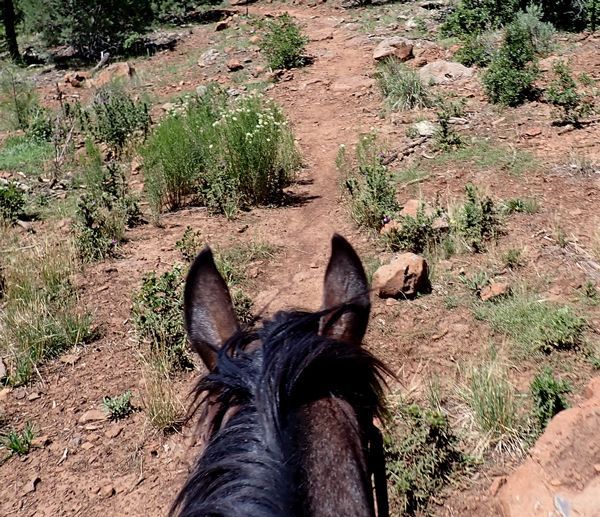
Mountain bikes: Do you love to go out and hike/wander in the woods? If you are an outdoor-focused person who loves wandering endless trails, loves exploring hidden elk trails, or just wants to challenge yourself over natural obstacles, then a mountain bike is probably the bike for you. Mountain bikes come in many styles, from “hardtail” with a solid frame and suspension fork or not, to “full suspension” with a rear shock and front suspension fork. Full suspension bikes are more forgiving to the rider and are easier to learn on. The suspension frame is designed to allow the bike to flex fore and aft as you move over obstacles, keeping both wheels firmly planted on the ground. A hardtail bike takes a little more skill and adaptability to move over obstacles in comfort, but is lighter and less expensive. I have several mountain bikes, from fully rigid hardtail (no suspension fork) to full suspension, and enjoy each for its own reasons, dependent on the trail surface and complexity. If the trail is smoother, a hardtail is the one I choose, but if there are rocks to maneuver through, a full suspension is much more desirable.
Neighborhood cruisers: Do you want to take a daily ride through Torreon or a similar neighborhood, where the roads aren’t too busy and you can explore safely on solid surfaces? A cruiser bike might be right for you. A cruiser has a much more upright posture and allows you to easily look around you without straining your neck. Many cruisers come in a low-step design so that you don’t have to kick over a seat to mount the bike. Put a basket in front or panniers in the back for a great way to have an excuse to take a ride down to the mailbox or over to the local store for some dinner components. Giving yourself a daily reason to get out and ride your bike is a great way to fool yourself into getting exercise and relaxing.
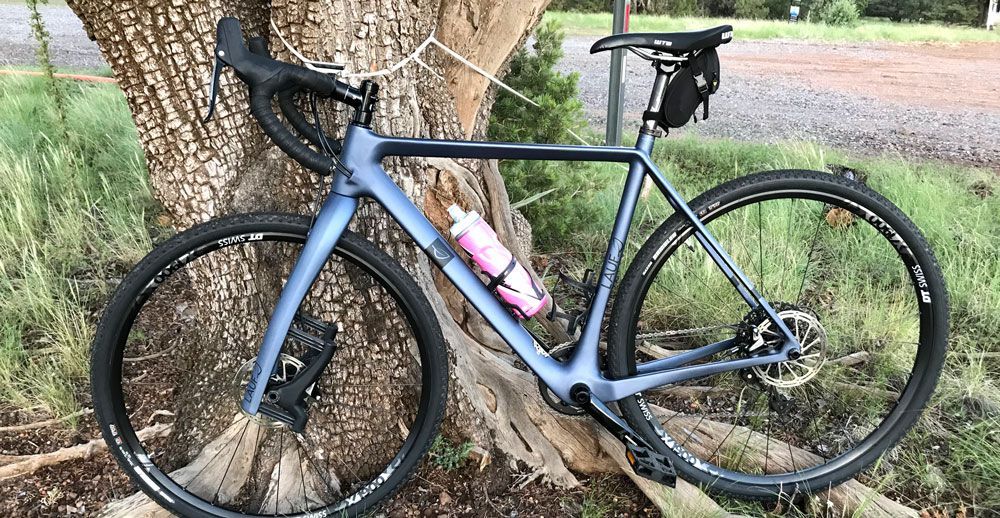
Gravel bikes: Do you love to challenge yourself to “go the distance” and love being out in the woods, but maybe not on a trail? Do you love the feeling of speed but hate the idea of riding on busy roads? Then a gravel bike is the perfect bike for you. Gravel bikes are visually similar to classic road bikes, but have a more relaxed and stockier frame with wider tires. They are surprisingly capable on various road surfaces and even on many single-track trails. Gravel bikes with some suspension can handle washboards and…duh.. gravel. These bikes require a little more aggressive riding position than a cruiser does, but also move faster and more easily. If your goal is to put in the miles to improve fitness fast, while enjoying the gorgeous area we live in, a gravel bike is for you.
Road bikes: If you have a place to ride safely and want to go even faster and farther than you would on a gravel bike, a road bike might be for you. Think carefully before you commit to a road bike to be sure that you have several clear, safe routes to ride. As we all know, traffic these days is not the friendliest, and it takes a lot of faith in humanity to put yourself in the position of riding a bike alongside vehicles. Road bikes certainly give you wings to fly fast and free, and you will cover long distances and increase fitness rapidly.
BMX bikes: Are you a kid or a kid at heart and want to zip around tight corners, hit big jumps and fly around a track? BMX bikes are great for really getting your freedom of expression going and getting a great workout off the seat. BMX bikes are not meant to go long distances and are more for areas where you have a bike park to play in.
E-Bikes: Are you someone who wants to get out there with friends, but doesn’t want to struggle or hold them back? Do you want to get out more often and go farther each time? Are you someone who needs to get in shape or recover from surgery or injury? Have you been riding all your life but are getting older and finding that the recovery time between rides is holding you back from riding more often? And you want to get out there and just have fun? Then there is an e-bike version of every bike mentioned above…even for the BMX bikes.
Before you get all defensive about “needing exercise” or “wanting to challenge yourself”, read one of my several articles about e-bikes to get the facts. E-bikes (not the ones with a throttle, those are e-motorcycles) let you get out more often with less recovery time and with modulated use of the e-factor, let you get just as much exercise as you would on a non-e-bike. In fact, the heart rate profile of an e-bike rider is often much more stable at a sustained optimal exercise rate than that of a non-ebike rider, with spikes in heart rate during climbs.
E-bikes are incredibly motivating because they offer exercise without having to struggle up that first hill and let you ride daily rather than weekly with a few days’ recovery in between. E-bikes put you on the fast-track path to fitness because you can start out each ride with assist until you warm up, and then you can shut down the assist to finish a ride with as much challenge as you like. Professional cycling athletes use e-bikes regularly as part of their training and fitness regimes because they can do repeated versions of something they want to improve on without exhausting themselves and can increase endurance and focus. I ride my e-bike every Sunday, and, like I mentioned, when there is the “too many things to do” excuse looming over my head every time, the e-bike tempts me out, lets me explore trail-less areas and is just plain fun.
Indoor exercise bike: Are you just so busy that you have a hard time getting out regularly but want to stay in shape for when you can get out? Then having an indoor exercise bike is important to include in your bike collection. I normally leave the house just as the sun is rising and return as it is setting. There are dogs to walk in the morning and dinner to fix in the evening, so how do I make time to get out and ride? Not as good for flow state, but close, the trainer bike and associated virtual world is there for me nearly every evening to keep in shape during the week and drain my energy battery before bed so that intruding and unnecessary thoughts don’t keep me up. A different bike for different reasons all year long.
So…happy spring! My flow state is calling, and I need to get outside. Socks can wait to be paired, windowsills can wait to be dusted, papers can wait to be graded, and there are a whole bunch of chickens wanting to be fed.