Adopting a Mustang from the BLM
Article by Anne Groebner
Photos submitted by Melissa Johnson
Whatever your thoughts are about the wild horses in our neighborhoods or roaming the Apache-Sitgreaves or Tonto National Forests, one thing is for sure: they are living a wild existence — they are free for now. However, with the new wild horse management plan ready to be implemented, it might not be for long. To many, this is daunting, and they worry about what happens to them when they, these beautiful and iconic western symbols of freedom, are rounded up and carried away. I know, I wonder. Then, I met Melissa Johnson, a veterinary assistant at the White Mountain Animal Hospital in Lakeside, and I learned a thing or two about the process of adopting a wild mustang from the Bureau of Land Management (BLM). Melissa adopted Freyja from the BLM, and I found out that it’s not as difficult as it sounds. In fact, her experience has been enlightening. It seems Freyja, old Norse for “Lady,” is a gentle and sensitive mare with a wonderful disposition.
Johnson saw Freyja’s photo on Facebook. Annie MacDermaid, who works with “Forever Branded,” a non-profit organization that educates and helps promote Mustang adoptions, is well known for hauling horses from the BLM’s corrals in Nevada to Glendale. Johnson says MacDermaid has some mustangs already available in Arizona, but will also haul a horse from the BLM facilities for a fee. “I saw a picture of this bay on her Facebook page and I loved her face, her little stripe and her socks,” Johnson tells me. “I said, I’m going to get that horse!” — and she did.
Johnson loves horses. She started riding when she was six-years-old. She grew up in Virginia and rode English show jumping and English pleasure. When she turned sixteen, her parents brought her out west. She found people who needed someone to ride their horses; however, in the west, they primarily ride western, like barrel racing and rodeo. “I find it fascinating,” she says. “And I might try the western sports someday, but it’s not my thing.” She misses English show jumping.
Johnson submitted her application for Freyja to the BLM and was accepted. There are requirements to adopt, such as having a reliable facility and shelter to keep the horse. The fee was $125 for Freyja, and she had to wait a year to get the bill of sale, which will be in August of this year. The fees range from $25 to $125-plus, based on the age of the horse and how popular it is. Older horses ten and over, or horses that have been passed up for adoption three times, are sold straight out for $25, and the buyer gets the bill of sale immediately.
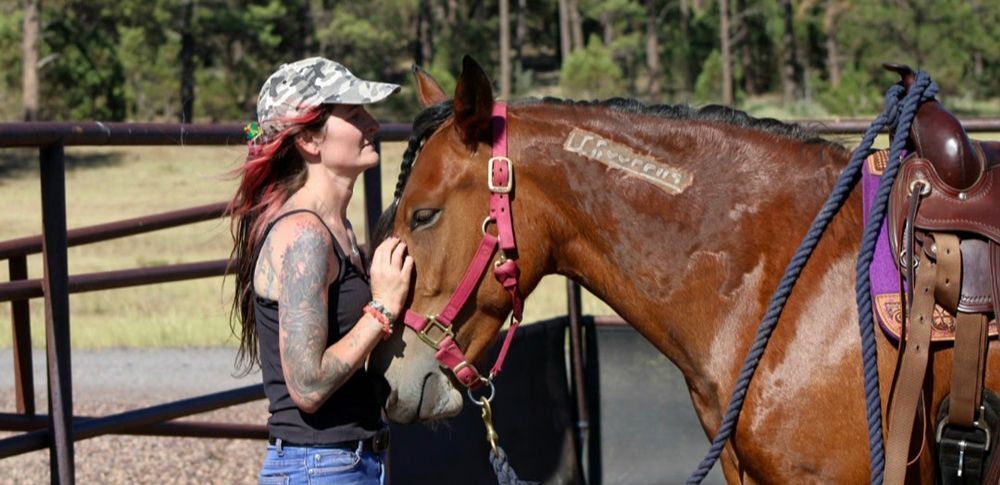
Every horse that ends up at the BLM facilities gets a freeze mark after it is captured. This is a permanent animal identification method that uses extreme cold (such as liquid nitrogen or dry ice) to alter the pigment-producing hair follicles. Once the freeze mark is placed on the horse, the hair always grows back white. To many owners of these wild mustangs, the freeze mark is considered a symbol of pride. Each mark is a reminder of the wild mustang’s story, its history and connection to America’s public lands.
The freeze mark is applied to the left side of the horse’s neck. Each symbol represents the birth year, where the horse originated, gather and health history, and its adoption or sale status. The first symbol is a U, which represents the U.S. Government brand and indicates that the BLM gathered the horse. The Alpha Angle System chart decodes the other symbols. After the U, the next two symbols (stacked vertically) represent the last two digits of the horse’s birth year (example 1- 9 = 2019). The rest of the symbols form a unique six-digit registration number assigned to the horse, including a four-digit tag number that the horse wears around its neck at the BLM facility.
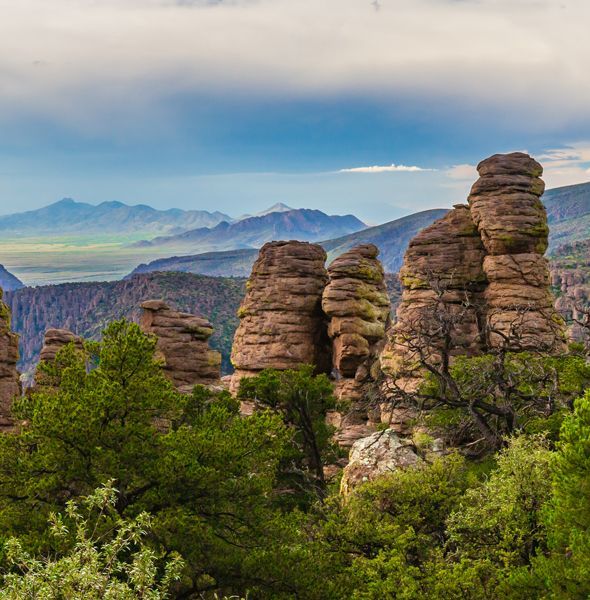
Freyja was “gathered” at Robert’s Mountain Horse Management Area (HMA). It is located approximately 30 miles northwest of Eureka, Nevada. The horses there are bays, brown, buckskin and roan in color, but there are several paints (pintos). The acreage consists of 99,321 acres of BLM land and 667 acres of a mix of private and other public lands for a total of 99,988 acres. Temperatures range over 100 degrees Fahrenheit in the summer and to less than 20 degrees below zero in the winter.
To Johnson, Freyja is the answer to a childhood dream of owning a Mustang, stemming from her obsession with the 2002 movie “Spirit.” A story about a “rambunctious wild mustang as he journeys through the untamed American frontier. Encountering man for the first time, Spirit defies being broken until he meets a young Lakota brave” (DreamWorks Pictures and Universal Pictures). Now Johnson has her Spirit in Freyja and training has begun.
“Freyja is very food-oriented,” Johnson explains. “So it makes it a lot easier to train her.” She started with a small amount of grain in her hand and would have her come to her. She used carrots and other delectable horse treats to get her used to her presence. Then she started touching her face, her neck, along the shoulders and any place Freyja would let her touch, while she was eating out of her hand. Moving slowly, she got her calm enough where she could stand beside her head and touch her with a halter. It was slow and tedious, but Johnson is building a bond with her. “She was taken from her life, moved out to Arizona and then moved here. That’s a lot!” This is home now.
The hardest part of training was getting the halter on her. She could touch all over her face, but she was still sensitive about her ears. Since horses can’t see straight forward or straight back, having something over her head was really scary. Now she can put the halter on and take it off, and Freyja will walk up to her and not run away. She has also put the saddle on her and has even sat in the saddle, but has not attempted to ride her yet. “She still has wild tendencies,” Johnson says. “But she has never, ever been mean or aggressive.” She is super curious and sweet, and according to Johnson, she is nicer than some domesticated horses she has worked with in the past. Freyja may just be a mountain pony now, but together they will ride the trails of the beautiful White Mountains.
Johnson also has two huskies and four cats: two Siamese and two Bengals.
The saga of the wild mustang is controversial. However, there have been some pretty creative solutions, such as using them for wildfire prevention through the Wild Horse Fire Brigade’s science of wildfire grazing and, of course, adoptions. I’m grateful for the efforts I see and read about by the horse advocates who assist with the future of these magnificent animals. Thank you, Melissa Johnson, and all the other people who have had the courage to adopt a wild mustang and/or a wild burro, and others who have made these adoptions possible.
Check out ForeverBranded.org for more information about adopting a wild mustang.