From scenic overlooks to rivers and wildlife in the White Mountains
By Dan Groebner
In the White Mountains of Arizona, we’ve been lucky to be experiencing AI for many years now. And we don’t gobble up gallons of water needed by fish or megawatts for mega-profits. That’s because our AI stands for “Attractions In situ.” The attraction word is easy enough, but what about that Latin-sounding second phrase? In situ actually means that something has been left in its original place.
So our White Mountain AI includes all the great hotspots in the area that we need to see in their original place. Sounds like a great excuse to get out and recreate and maybe discover something new, but for sure get some steps in using that high-altitude clean air.
So are you new to the area, or just visiting and looking for a short list of some of the White Mountain AI to explore? Depending on your interests and abilities, you can pick from the starting list below and then branch off to other AI experiences you plan independently. Feel free to submit your own favorite places to explore in the White Mountains responsibly.
The categories and locations listed are just examples that carry no guarantees of seeing or hearing the attractions we are looking for, but probably have great Kalshi or other prediction market probabilities. However, it would be smarter to save your betting money and use it for gas so you can see more of the White Mountains, at least!
Don’t be surprised if you experience some “critter-counter-encounterisms” that hunters usually fall victim to. If the term is not self-explanatory enough, it simply means that you usually end up seeing animals you’re not specifically hunting or looking for. So plan to be flexible, as you may be lucky and experience any of the White Mountains’ gems in any of these areas.
Scenic Overlooks
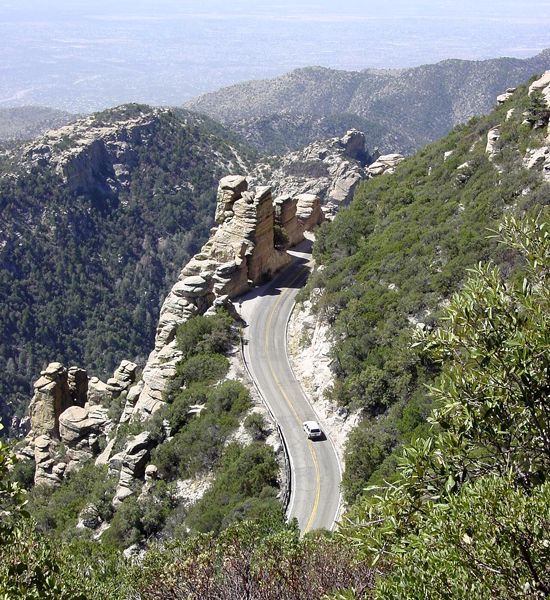
Many folks traveling from Phoenix to the White Mountains may come up AZ Route 260 over the Mogollon Rim east of Payson. It’s a great view winding up the side of the road cut, but it’s a much better experience parking and getting some photographs. Try Forest Road 172, which departs south from AZ Route 260 at the Mogollon Rim Visitor Center on the edge of the rim. It’s unpaved but suitable for passenger vehicles into the day-use area just past the Visitor Center facilities. The paved Forest Road 300 that goes north from AZ Route 260 at that same intersection also has nice pullouts and trails that provide some amazing views before you get to the turnout for Woods Canyon Lake.
Another great scenic overlook that can be combined with other trips is the Blue Vista Scenic Overlook on AZ Route 191, south of Alpine, and even south of Hannagan Meadow Lodge a few miles. The highway is also known as Coronado’s Trail, as it may be near where the Spanish explorer traveled north into Arizona and New Mexico. There’s scenery and possible wildlife around every turn, which there is no shortage of. The turns and curves, that is!
Birding Hotspots
If you are looking to get out of the vehicle and get in some high-elevation birding, there are lots of great places to go depending on what kind of birds you are looking for. The White Mountains provide larger bodies of water stocked with fish for the hungry osprey and eagle, which can often be seen effortlessly snagging those elusive trout right before our eyes.
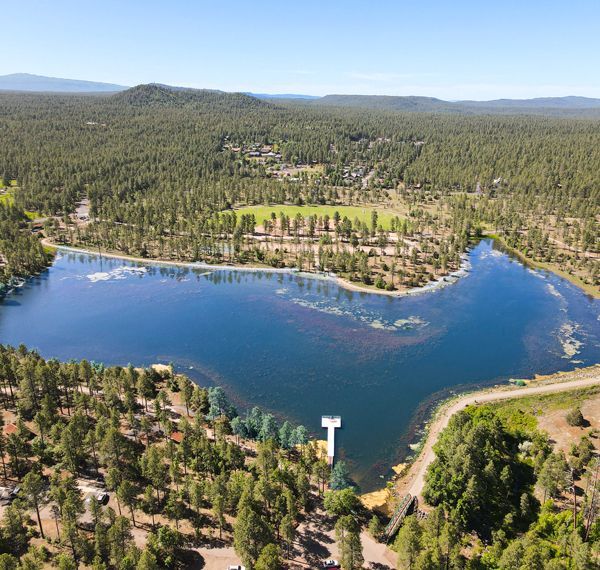
The best local lakes to see these raptors in action would be Show Low, Rainbow, and Fool Hollow Lakes. Try the lower end of Show Low Lake by the dam where the water is the deepest and Rainbow Lake from the Game and Fish boat landing area on the north side of the lake near White Mountain Boulevard. If you have a license and go fishing at Fool Hollow Lake, you can get in without paying the usual daily user fee, but don’t forget your binoculars and your fishing gear.
If it’s too windy or you are more interested in songbirds, there are some wonderful trails along the Little Colorado River (LCR) in some sheltered and lush growths of willow and other riparian trees and shrubs. At the lowest elevation along the LCR is the Wenima Wildlife Area, located off AZ Route 180/191 just north of Springerville a few miles. Trails extend both up and downstream from the bathrooms and parking lot, where you could see yellow-breasted chats, blue grosbeaks, willow flycatchers, catbirds, and other stream-dependent birds.
Another trail near Wenima Wildlife Area is along the LCR in a new portion of the Becker Lake Wildlife Area. One parking lot is located along Airport Road in Springerville where it crosses the LCR, and another lot is found at the other end of the trail along AZ Route 60 between Becker Lake Road and Springerville.
The Audubon Society’s Little Colorado Important Bird Area extends all the way from Wenima Wildlife Area up through the town of Greer, where an even higher variety of birds could be found at some headwaters of these creeks. Just outside of Greer are Bunch, Tunnel, and River Reservoirs where waterfowl gather, including a nesting colony of great blue herons, cormorants, and black-crowned night herons. Osprey are often common on this lake as they nest nearby.
For folks who may want to stay near Pinetop and Show Low and don’t want to deal with a hike that goes up and down, and then down and up, and then repeats itself, there is a worthwhile place to visit to see almost any kind of area wildlife. To reach Jacques Marsh, located off Porter Mountain Road, turn on Juniper Road near Bertie’s 2, The Stockyard Restaurant.
At this marsh, you can certainly see lots of ducks, with even some nesting, as well as marsh birds like sora rails, great blue herons, yellow-headed blackbirds, and belted kingfishers. Glance up into the sky every once in a while, as peregrine falcons and bald eagles frequent the area because of the high abundance of prey species.
Big Game “Safaris”
So are you more interested in seeing fur than feathers? The White Mountains still offer some mammalian AI that can often be seen from the comfort of your vehicle. As with most wildlife, the best time to see them out and about is around sunrise and sunset, so photography can be challenging unless you have the right equipment, especially a good tripod when the light gets really low.
Lots of people see too many elk when they don’t want to, such as traveling 65 mph on AZ Route 260 at night! But if you take your time on slower roads, now is a great time to see those bulls growing their antlers from those fuzzy little branch stubs. The highest elevation roads, such as State Route 273 starting from the junction with AZ Route 260 (also known as the Sunrise Ski Hill turn) all the way past the Big Lake turnout are the best places to see large herds of elk, with some very near the road.
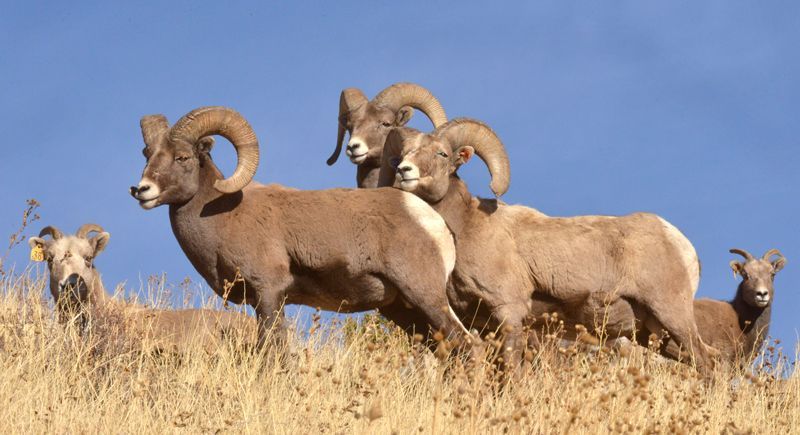
Keep travelling on AZ Route 273 until the paved road turns into Forest Road 249 past Big Lake, and you’ll be entering some high-quality Rocky Mountain Bighorn sheep country. If you want to up your chances of seeing these sheep, turn onto the unpaved Forest Road 276 after you pass through the Three Forks area, often called the “Switzerland of Arizona” with its deep green mountain valley. Bighorn sheep are often seen in the Three Forks area, grazing in herds along the road and down in the river bottom.
Travel south on Forest Road 276 until it hugs the shore of the East Fork of the Black River. Drive slowly and you may be lucky to see a full-curl ram or even a lamb in this area, as the sheep may feel safer from large predators near some of the high-use camping spots along the river.
Once you get down to the road junction called Buffalo Crossing, you can choose to take Forest Road 24 back up to the Big Lake area and home or continue on Forest Road 25 to the west all the way to Wildcat Crossing of the main stem of the Black River. This area along the Black River is also a bighorn sheep hotspot, but you better plan on bringing lunch and a full tank of gas to be sure.
If you get caught out in our expansive National Forest after the sun goes down, the White Mountain AI experiences don’t disappear. You’ll have to wait for complete darkness to appreciate the lack of blurring atmosphere at our elevation to be totally blown away with the number of stars shining down at us.
But while you are patiently waiting for darkness in a comfortable camp chair just outside of your parked vehicle on a quiet forest road, you could be serenaded with the calls of many types of owls including Mexican spotted, western screech, northern saw-whet, and great horned owls.
For the most adventurous, try your best at imitating a wolf or coyote howl almost anywhere on the east side of the Apache-Sitgreaves National Forest, and you’ll have a great chance of getting a reply! We’re fortunate to use our own “OI” organic intelligence to fully enjoy our White Mountain’s “AI” attractions
in situ.