Bird Drunk Along the Trail
PHOTOS & ARTICLE BY ROB BETTASO
There are many ways to appreciate the outdoors and each seems to have its various pros and cons. On most warm-season days, I typically start the morning with either an easy nature walk or a local bike ride; either of which begins right from my front door. Often, I will end a day the same way I started: with a quiet, solitary walk where my primary goal is not exercise, but rather, simple nature appreciation. Such are the joys of life in retirement.
But if “one does not live by bread alone,” then I can also not always be fulfilled by local forays. My second most common option is to leave town and do a more ambitious outing that allows me to take a longer hike or bike ride (often with a friend or two) but still return home the same day. This option provides more adventure and exercise, but also entails greater expense and a larger “carbon footprint.”
Let me skip my third most frequent option for a moment and jump right to the fourth (and generally final option) for spending time in the outdoors: a major road trip (or flight) that is significantly more complex and demanding. Real-life examples from recent years would include my backpacking trip to the Wind Rivers of Wyoming and my tour of the Patagonia region of South America (which involved both backpacking and long day-hikes). Such travels obviously entail much greater levels of the three primary elements of modern life: time, money, and energy.
But now, I’m going to return to that third most common of my approaches to enjoying the outdoors: a car-camping trip. The beauty of a car-camping trip is that it can be to someplace (or, multiple places) that is near or far and is also a mix of “roughing it” and comfort. To wit: my car-camping trips typically allow for sleeping on a cot under the open sky; eating tasty foods cooked on a small camp-fire grill; and, bringing enough water so that I can wash up without worrying about running short of drinking water.
Some car-camping trips include rugged day hikes or long bike rides; others allow for sightseeing in the touristy spots of our National Parks or other semi-wild areas. Some require difficult four-wheel driving to escape the hoards; others are close enough to a town that one can easily zip to a grocery store to augment one’s provisions. In short, car-camping is the best of all worlds, especially as we age into our senior years.
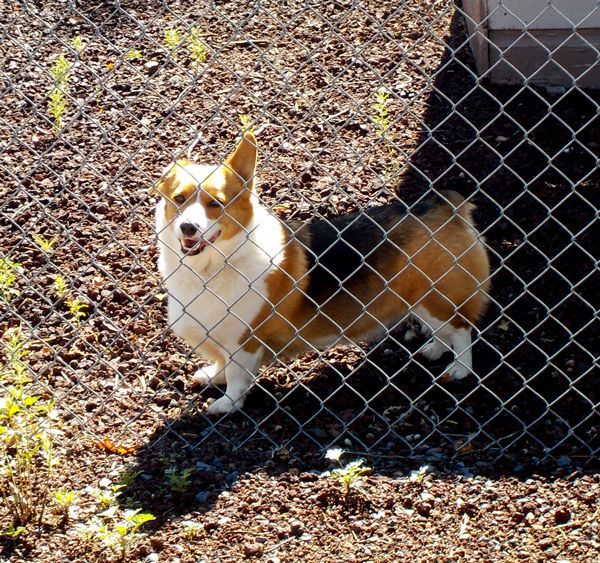
Last autumn I joined my frequent camping buds, Scott and Jeff (and Jeff’s happy pooch, Koda), for a four-day car-camping trip not too far off the Mogollon Rim. This spring, we returned to the same exact camp because we had so much enjoyed our fall trip. It can be very rewarding to visit a site over the course of many years, especially if the site remains undiscovered by too many others and, therefore, is spared the ravages of over-use. It is also wonderful to see the same site during each of the four different seasons; as each is unique and offers its own array of marvels.
On the first early morning of our recent camping trip, I took a slow, solo walk along a creek that was simply extraordinary. I meandered for a while downstream and the going was tricky -- as it generally is along a stream bank strewn with rocks and roots that almost seem designed to send one tumbling. My eyes were focused on the terrain and I paused frequently to enjoy the play of water along its course: here, plunging down a small cascade; there, slaloming through a field of boulders; and everywhere, filling the air with its sustained melody of water music.
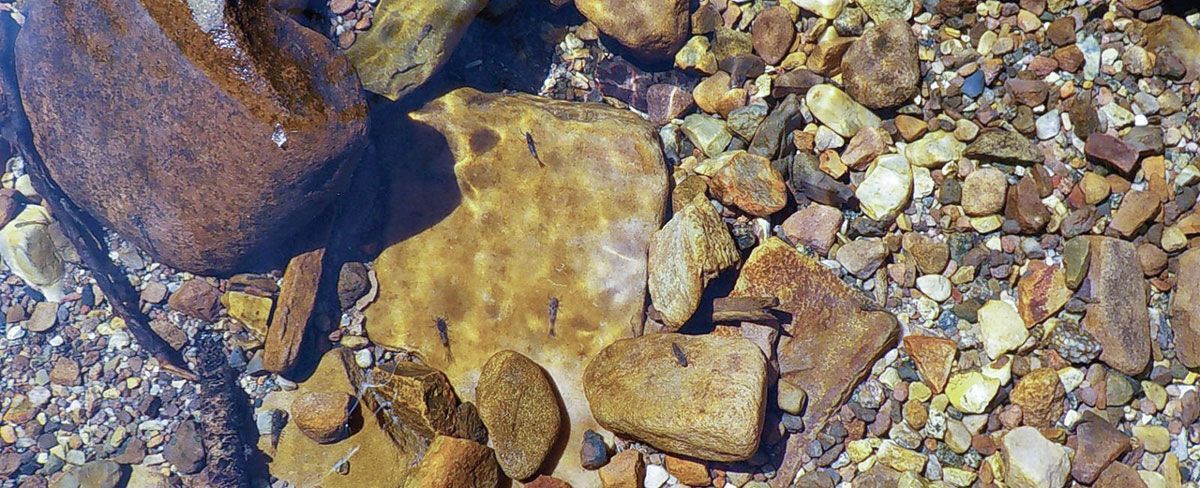
At one point, I stopped to rest and dip my bandana into the stream so as to wash the sleep from my face. I noticed that amidst the clear waters, life was everywhere, and all of it was of the invertebrate form. On two cobblestones alone, I watched as four spiders jockeyed for position, and I wondered if they were competing for the best places to ambush their prey while still avoiding becoming the hunted themselves.
After a time, I wearied of rock-hopping and also wanted to hike to where the sounds of birds would be less masked by the sounds of rushing water. I struggled up the steep, forested slope and eventually reached a higher elevation that allowed me to hear the full spectrum of life without the competing din of rushing water. The morning was peaceful, in a wild sort of way, with bird song filling the air and woodpeckers drumming all through the thick woods.
I hiked along an imaginary contour line for about 30 minutes but stopped frequently to identify the many bird species that I couldn’t be sure of by song alone. At one point I sat down to rest, but, because there were soooo many birds, I found it frustrating to not be able to turn a full 360 degrees. I stood again and slowly rotated in a clockwise fashion and counted birds. In a mere five minutes, I definitively identified 11 species and numerous individuals of each type. It was an avian feast for the eyes and the ears: birds singing, calling, drumming, buzzing, flying, perching, fighting, courting, feeding… it was exhilarating and I felt almost woozy from all the frenzied activity. To put the entire, rich, experience as succinctly as possible: it was early morning; it was spring; I was in a wonderfully intact, Arizona habitat; and, I was, what I would have to call, “bird-drunk.” Yes, I was totally intoxicated by such a marvelous profusion of bird life!
Like the creek down below, the bird song continued along on its own noisy course and I decided that it was time to sober up and have some hot coffee and breakfast. But first, I had to make my way down the treacherous slope and back to the creek. I stopped occasionally to photograph a bug, or a flower, or a bug inside a flower; and, when I came to the creek I picked my way along some scattered rocks and crossed to the other side. Not wanting to return the same way I had come, I opted to take the short hike that brought me up the other side of the ravine and back to the 4WD road we had used to get to camp.
On my return journey, I was mostly walking into the sun so I had to turn around periodically to get front-lit views of the many birds that were still very active along the riparian corridor. Most of the best views I had were of the birds that were flitting through the newly budding sycamores. As I walked back to camp I had good, long looks at several species that many a birder from somewhere other than the American Southwest would drool over, including Grace’s Warbler, Painted Redstart, Red-faced Warbler, Bridled Titmouse, Vermillion Flycatcher, and Mexican Jay.
When I arrived back in camp, Jeff and Scott were done with breakfast and were heading out to do some exploring of their own. I settled in behind my pick-up and used the tailgate as a table and commenced cooking up oatmeal chocked full of bananas that I had mushed up into the boiling water prior to adding the oats. After food and coffee, I was ready for a mid-morning nap so I moved my cot into the shade of a big Doug Fir tree and set sail for the Land of Nod.
When I awoke, an hour or so later, morning was ending but the House Wren pair that were nesting in an old, gnarly oak were making a fuss that was audible all through our scattered campsite (with my cot on the far west end, Scott’s tent on the far east end, and Jeff’s tent in the territory in between). I looked around the camp at all the different types of trees and, since Jeff and Scott always give names to our different camps, I decided that when they returned I would suggest that we call this site “Sycamore Camp.”
In part two of this story, I will tell you more about Sycamore Camp and its namesake tree. See you back on these pages in the lively and happy month of July.