
ANGLING FOR NATIVE "VERDE TROUT"
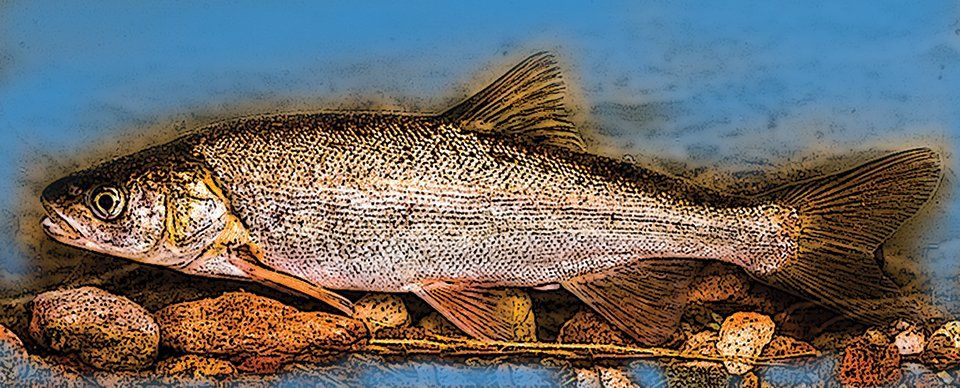
Looking for a fun and new angling opportunity in the Southwest? Tired of catching the same old Rainbow Trout or Largemouth Bass that everyone else can't seem to get enough of? Listen up to a thing or two about the lesser known “Verde Trout.”
When the sweltering days of summer finally catch up to the high mountains of Arizona, even the trout seem to feel the effects. Trout, which are a cold-water fish species, become less active and less likely to take bait or lure in the heat of the White Mountains summer. Thankfully, the warmer waters of the Black River in the summer and early fall are exactly what one species of fish has been waiting for all year.
What was first known as a “Verde Trout” by the early settlers to a wild new land full of unfamiliar flora and fauna, these fish are now officially known as Roundtail Chub. Roundtail Chub is a fish species belonging to the minnow family, though they can grow upwards of 18 inches in length. Despite the fact that they are defined as a minnow, they behave much more like a trout when living in the stream and when fighting on the end of your fishing line. Roundtail Chub is a fish species that is historically native to the Colorado River and Gila River basins along with their major flowing tributaries. They are a fish that prefers warm to cool flowing water and is adapted to the extremes of the Southwest river systems. Having lived through millennia of seasonal drying of rivers/streams, annual warming trends, siltation events and massive floods bigger than what we know today, they are a fish species designed to endure through it all. More recently, they have faced additional onslaughts of new challenges as they strive to carve out a living in the new reality of the desert Southwest.
Native Fishes in Peril
The many fish species historically native to the diverse waters of the low to high deserts of the Southwest have faced a new set of issues following the modern colonization of the past few centuries. With colonization of an arid desert land comes development of the few water sources available.
Roundtail Chub, their many close relatives and other small native fishes have succumbed to much of the development in vast areas of their historic range -- with some species now restricted to streams numbering so few you could count on one hand. For some species, it was the industrial scale impoundments (in the form of reservoir dams) that withered away population connectivity to the point of extirpation. For others, it was the aquatic and terrestrial habitat degradation from intensive use and development, both industrial and rural. For many more, it was the competition against new species of non-native fish which were often placed purposefully by government organizations to improve fishing recreation opportunities. For most, it was some combination of these symptoms of modern land development.
Now, we have the benefit of hindsight as much of the damage has already been done by these non-native fishes outcompeting the natives who have not evolved to survive such a threat. However, the desert Southwest has places still remote enough that some populations of these natives are still blissfully unaware of the threats that nearly wiped them out entirely.
Angling Opportunities for Native Roundtail Chub
Thankfully, despite formerly being listing under the Endangered Species Act and despite threats coming from all directions, conservation efforts have continued to support robust enough populations of Roundtail Chub to allow for -- and encourage -- catch-and-release fishing opportunities in some areas of their current range.
In Arizona, some of the best (and legal) places to fish for Roundtail Chub include the Verde River (along with many of its tributaries like West Clear and Oak Creeks), Fossil Creek (special regulation season) and the Black River right here in the White Mountains. Remember to always be completely familiar with fishing regulations, particularly when going to fish a new piece of water.
Roundtail Chub prefer the sections of these rivers and streams where the stream channel deepens a bit and the water velocity slows down some. Remember, they act very much like a trout so just pretend like you are fishing for trout. Hike along a stream or river with Roundtail Chub -- such as the Black River near Wildcat Crossing --and cast into these deeper sections of river known as “Runs” and “Pools.”
For angling gear, think small and light. While they are respectable fighting fish, they are no monsters and lighter weight gear will lend you a better time. Spinning gear or fly-fishing gear can be equally as effective. For spinning gear, small shiny lures such as spinners (or my favorite, Kastmasters) are like Chub candy. Cast these into pools and runs, trying different locations, depths and retrieve styles. You will often be able to see small young Chub chasing your lure all the way to shore. Fly-fishing anglers will often have luck retrieving small streamers, wet flies or nymphs. Chubs are active fish and often respond well to moving attractants.
If you are lucky enough to catch a Roundtail Chub (which at times will be much more prevalent than trout -- even in the Black River), remember to treat it with care. Most importantly, remember that all Roundtail Chub must be released unharmed in Arizona. You don’t want to eat them any way -- minnows are known for having an unpalatable concentration of fine bones. These native sportfish are hardy but be sure to practice appropriate catch and release tactics to ensure the Chub survives another day and allows the species to reproduce for hopefully another few millennia. Be sure to handle fish with already wet hands; limit the amount of time out of the water and consider fishing with barbless or single hook lures/flies even when regulations do not require such. Practice these techniques and you should have a quick and clean release nearly every time.
Turning your gratitude into an act of kindness

Getting through the holidays Happy not Grumpy

A memorial to a great historian

A baby, a tent and hunting for elk
Our changing weather and what it means
The Rim that stretches across the northern face of Arizona

Celebrating 100 Years of the Lake Mountain Lookout

Mastering the techniques of sourdough

Thrifting for Art
Set your intentions and celebrate small victories