...and the mountains were filled with wild turkeys roaming free.
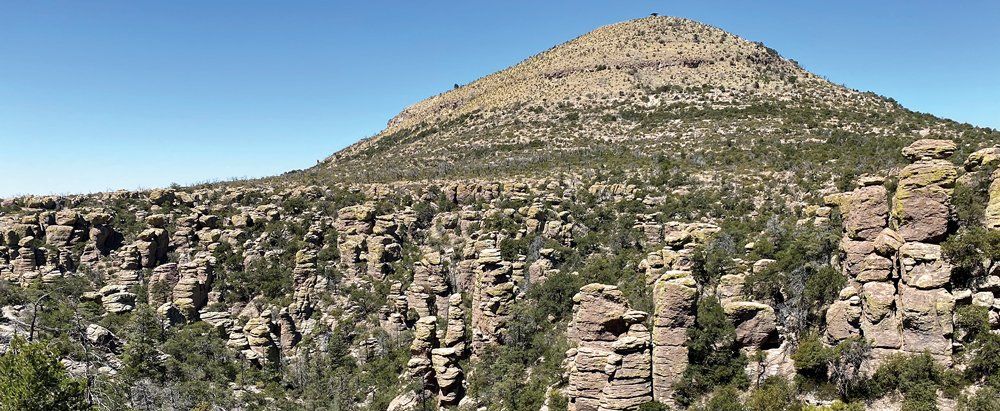
In 1885, “Mountain of the Wild Turkey” is what the Spanish heard this place was called in Opeta (the language of the Aztecan). And the mountains were filled with wild turkeys roaming free. Some medicine men of the Apache called it “…woman with a most romantic history.” I heard that some Chiricahua Apache call the tall spires, “standing up rocks.”
As I gazed out at the spellbinding scenic panoramic view of these unusual formations, I too, felt it was beautiful beyond words, and strange with a magical yet haunting feeling. These wild Chiricahua mountains, in Southeastern Arizona, are a large mountainous range that is part of the Coronado National Forest. Its statue rises impressively to 9,763 feet. The formations in these mountains have been called hoodoos, even fairy chimneys. But they are tall thin rock spires created from many years of erosion. The entire area is a wonderland of rocks that will mesmerize your eyes and spark your imagination. To preserve this living geological wonderland, the Chiricahua National Monument was established in 1924 to preserve and protect the pinnacles. The park is over 12,025 acres mostly designated as wilderness.
Historically speaking, the Clovis archeological sites are the early evidence of human inhabitation there. After them, the Cochise culture inhabited the area from 3000-200 BCE, both without ceramics. Afterward, the pottery found was Mogollon and Nimbres from about 150 BCE to 1450. Then came Chiricahua Apache, until they were forcibly removed in the late 19th century. They had called it “home” since the 1940s. Traditionally they were nomads, eating plants, and hunting large animals. This Apache tribe was feared and respected for they were superb fighting warriors. They resisted and fought against any takeover. However, Geronimo and Cochise could not hold back the flood of white men taking over their land. And sadly, they were forcibly placed on reservations in New Mexico and Oklahoma.
In 1881, a mining claim was filed, called the Hidden Treasure. Mining has happened there intermittently throughout the following years. The Chiricahua were skilled scouts and even today used by the drug cartels for lookouts from their peaks for Border Patrols.
Geologically speaking, these mountains are an uplifted structural block containing Precambrian, Paleozoic, and Cretaceous sedimentary rocks around a caldera formed by volcanic eruptions some 35+ million years ago. The last eruption (27 million years ago) created 2,000 feet of silica-rich volcanic ash, called rhyolite. Rhyolitic tuff is used in construction. Obsidian (Rhyolite volcanic glass) has been used from the earliest times to create sharp edges. The word itself was created in 1860 by German geologist Ferdinand von Richthofen from the Greek word rhyax (stream of lava) and the rock name suffix “lite”. Rhyolite is simply super-heated ash particles that melted together form layers of gray rock.
This process is still happening today.
I found it fascinating how these ancient rock formations have stood the test of time, and let the elements create of them what they wished.
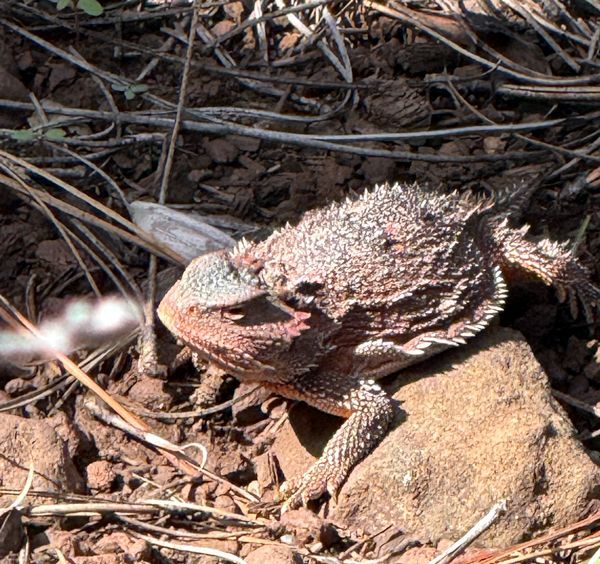
There are many species presently inhabiting the Chiricahua mountains. As a matter of interest, I learned that there are over 375 bird species that have been recorded. There are other animals too: ocelots, mountain lions, jaguars, black bears, and the white-tailed deer. I learned too that there are reclusive coatimundi and many reptile species. I am glad that we did not meet up with these roaming animals during our Southern Arizona trek.
At the base of these mountains, the elevation is 3,000 feet and then it rises to approximately 6,000 feet, which makes it a shiver-night to sleep but sunny and warm in the daytime.
Speaking of sleeping, our group chose to reserve sites in Bonita Campgrounds. Each site is nestled among the native trees which purport reasonable privacy for each site. It comes with a BBQ stand, a nearby water spigot, and easy access to restrooms (no showers). You are dry camping mostly as there are no hookups for water, electricity, or sewer at each campsite, but the price was reasonable and the park entrance fee is free.
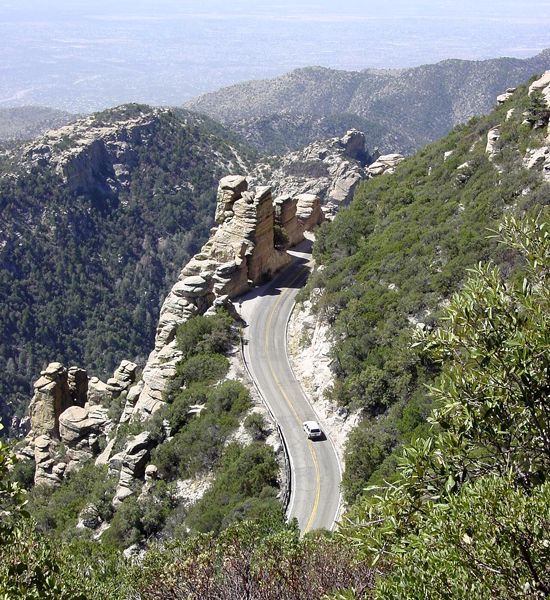
We took the Bonita Canyon drive which leads to Massai Point. The overlook there has a 360-degree view of Rhyolite Canyon, surrounding valleys, and the spectacular mountain peaks. Other than the designated roads, most of this area of the park is restricted to foot traffic hiking some 17 miles or horseback. You will meander through forests, rock formations, and meadows.
This park maintains vigilance for protecting the environment, keeping visitors safe, and supplying information to help visitors appreciate what is in the park.
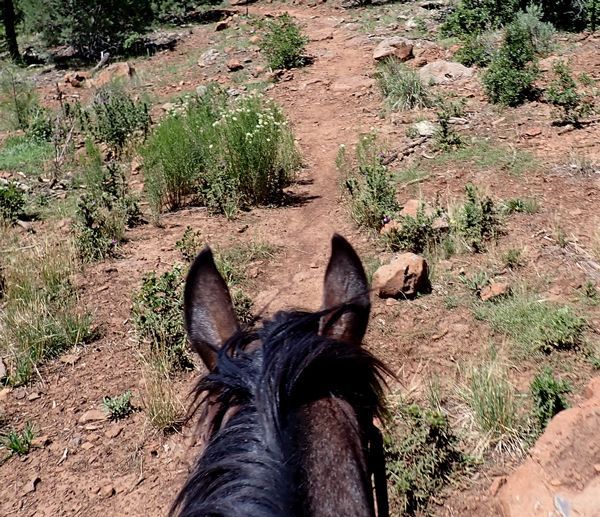
There are several great hiking trails in this special park. One of the ones we took was Echo Canyon Grottoes, starting at Echo Canyon Trailhead. The surprising vistas are a treasure, and the trails are easy to manage. We met some horse riders along the way too – share the trail.
I was pleased we chose this area for our two-night campout. It was too windy to have a campfire the first night. But we were allowed a campfire the second night – we brought a portable firepit and of course, our own firewood, and told our stories -into the night.
If you choose to go, best to make your reservations ahead of your arrival. Take fun food, drinks, and a fat parcel of good stories to share with your fellow campers. Happy Trails!
For more detailed information and updates, contact Chiricahua National Monument.
www.nps.gov/chir
Call for more information: 520-8243-3560